
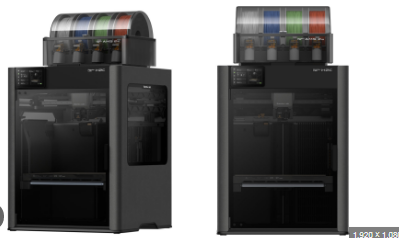
In modern manufacturing and prototyping, efficiency and precision are more critical than ever. Businesses often juggle multiple 3D printers to meet varying production demands, which can increase operational complexity and maintenance costs. The Bambu Lab H2C printer offers a compelling alternative by consolidating multiple capabilities into a single, high-performance machine. This not only streamlines workflows but also enhances overall productivity.
Why consider switching to a single printer?
Managing several 3D printers requires constant monitoring, calibration, and material management. Each machine adds potential points of failure, which can delay projects and increase operational overhead. By using a single, versatile printer, companies can minimize downtime, reduce maintenance expenses, and achieve consistent output quality across diverse applications.
What makes the Bambu Lab H2C printer stand out?
The H2C printer is engineered with advanced features that make it suitable for both industrial and small-scale production environments. Its ability to handle a wide range of filaments, precise layer control, and robust build volume allows users to produce complex parts with minimal errors. Automation features, such as self-leveling and intelligent monitoring, further reduce human intervention, making the production process more seamless.
Can one machine really replace multiple printers?
Yes. The H2C printer’s adaptability allows it to perform tasks that previously required specialized machines. For example, switching between prototype models, functional parts, and detailed aesthetic pieces no longer requires separate printers. This consolidation not only saves floor space but also simplifies training and operational management, making it ideal for startups, engineering teams, and design studios.
How does it impact cost efficiency?
By consolidating multiple machines into one, businesses can see substantial cost savings. Fewer machines mean reduced energy consumption, lower maintenance costs, and fewer spare parts to stock. Over time, the efficiency gains translate into quicker project turnarounds and higher ROI, which is particularly important for companies operating in competitive industries.
Is it suitable for large-scale production?
Absolutely. While it excels in small-scale prototyping, the H2C printer’s high-speed performance and precision capabilities make it a viable option for larger production runs as well. Its reliability ensures consistent results even under extended operation periods, providing businesses with the flexibility to scale production without additional investments.
Conclusion
For organizations looking to streamline operations, enhance productivity, and reduce costs, replacing multiple 3D printers with a single, versatile machine like the Bambu Lab H2C printer is a strategic choice. Its combination of precision, speed, and versatility makes it an essential asset for any modern production environment.